TL;DR: Installing a graywater system for new construction is the single smartest water decision you can make while building, because adding it later costs two to three times more. This article explains what a graywater system does, why new builds are the perfect time to add one, and how Water Recycling Systems makes the whole process straightforward in Southern California.
Why New Construction Is the Best Time to Add a Graywater System
Most homeowners only think about water when the bill arrives or drought restrictions hit. By then, retrofitting a solution costs far more and disrupts finished work.
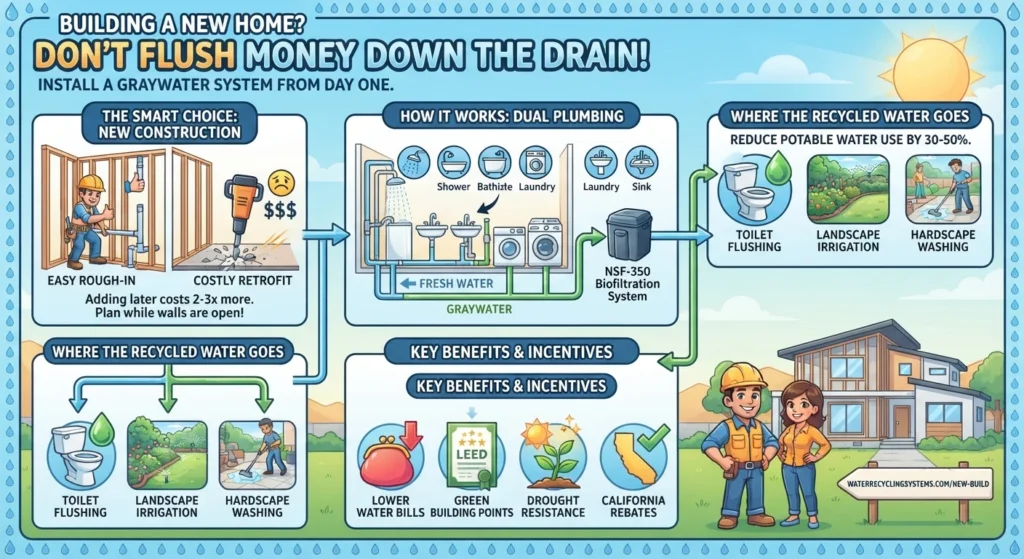
A graywater system for new construction is designed into the plumbing from day one. The pipes, filtration, storage, and distribution points are all planned while the walls are still open. No jackhammering. No paying a contractor twice.
Water Recycling Systems has been installing green building water solutions across Southern California since 2006, working with residential developers, engineers, and architects who know that a home built smart today saves money for decades.
1. What a Graywater System Actually Does in a New Home
Graywater is the water from showers, bathtubs, laundry machines, and bathroom sinks. It is not sewage. It is lightly used water, and right now your new home is designed to send all of it straight to the sewer.
A properly designed new home water system captures that water, filters it through NSF-350 certified biofiltration, and puts it back to work for irrigation, toilet flushing, and hardscape washdown.
The EPA has identified water reuse as a top solution for reducing freshwater demand, with regulations expanding in California and 18-plus states to encourage on-site reuse in residential and commercial construction.
Visit the Greywater Recycling Systems page to see exactly how the filtration and distribution process works for residential new builds.
Graywater System Costs, Savings, & Requirements
| Parameter | Technical Specification |
| Cost Comparison | Retrofitting post-construction costs an average of 2.5 times more than building during new construction (with typical professional whole-house residential systems averaging $4,000 to $15,000+ depending on complexity). |
| Financial Payback | Average return on investment is achieved within 3 to 7 years. |
| Water & Bill Savings | Reduces indoor and outdoor freshwater demand by 30% to 50%. |
| Regulatory Requirements | Fully authorized and compliant under California Title 17 regulations. |
| Filtration Standards | Utilizes NSF-350 certified biofiltration equipment. |
| Indoor Demand Offset | Toilets account for 24% of total indoor water use, supplied entirely by recycled water. |
2. The Dual Plumbing Advantage You Can Only Get During Construction
Dual plumbing runs two separate pipe systems in a building: one for fresh water and one for treated recycled water. In a new build, this is simple to add during rough-in. Once the walls are closed and flooring is down, adding it becomes a major renovation. Here is what it makes possible:
- Toilet flushing with recycled graywater: Toilets account for roughly 24 percent of indoor water use. Flushing them with captured graywater removes that entire demand from your potable water supply.
- Landscape irrigation without tapping the main line: In Southern California, outdoor water use is the single largest residential water expense. A graywater feed eliminates most of it.
- Hardscape washdown and water features: Driveways, patios, and decorative pools can all draw from your recycled supply without using a drop of fresh water.
This is what separates a standard new build from a genuinely sustainable home construction project. The infrastructure is in the walls. The savings start on day one of occupancy.
3. How Graywater Systems Support Green Building Certification
Green building certification programs like LEED award points for water efficiency measures. A graywater system reducing indoor potable water use by 30 percent or more directly improves your project’s certification score, property value, and marketability.
The EPA’s WaterSense program identifies on-site water reuse as one of the highest-impact strategies for reducing residential freshwater demand. Homes with integrated recycled water systems can use up to 50 percent less municipal water than a standard build of the same size.
Water Recycling Systems works directly with architects and civil engineers from the design phase, so graywater infrastructure is built into the project plan from the start.
Browse the Gallery to see completed residential and commercial graywater projects across Southern California.
4. What to Expect from the Installation Process in a New Build
Adding a graywater system to a new build is straightforward when planned from the start. Rough-in happens alongside standard plumbing, filtration installs before drywall, and distribution connects during finish-out. Here is how the process works with WRS:
- Design consultation: WRS reviews your floor plan and works with your builder or architect to identify the optimal graywater capture points, storage location, and distribution zones.
- Rough-in coordination: Separate drain lines for graywater sources are run during the standard plumbing rough-in, keeping the project on schedule.
- NSF-350 filtration installation: The biofiltration system is installed in a utility area before drywall closes in. The equipment is compact and designed for residential spaces.
- Final connection and testing: Distribution lines to toilets, irrigation, and other endpoints are connected, tested, and signed off before occupancy.
California homeowners and developers may also qualify for rebates on graywater system installation. Check the Rebates page to see current programs available in your area, and visit the About Us page to learn more about the WRS team and their 18 years of installation experience.
5. The Long-Term Financial Case for Building With Graywater From Day One
Water rates in Southern California have risen sharply over the past decade. A home built with a new home water system that recycles graywater is insulated from much of that future cost increase before the first resident moves in.
The cost of integrating a graywater system during new construction is a fraction of what a retrofit costs later. Homeowners who add a system during the build phase consistently report payback periods of three to seven years. A sustainable home construction project with dual plumbing also qualifies for green building incentives and reduces dependence on water restriction events that are increasingly common across the American West.
For questions about your specific project, reach the WRS team directly on the Contact page. Common questions are also answered on the FAQ page, including details on permits, maintenance, and system lifespan.
Frequently Asked Questions
Q1: What is a graywater system for new construction?
A graywater system for new construction is a plumbing setup that captures water from showers, sinks, and laundry machines, filters it on-site, and redistributes it for toilet flushing, irrigation, and other non-potable uses throughout the home.
Q2: Why is new construction the best time to install a graywater system?
During new construction, walls and floors are open, so dual plumbing can be added during the standard rough-in phase. Installing it after the home is finished costs two to three times more and requires significant disruption to completed work.
Q3: How much water can a graywater system save in a new home?
A properly designed new home water system with graywater recycling can reduce potable water use by 30 to 50 percent. In Southern California, that translates to significant annual savings on water bills, especially during drought restrictions.
Q4: Is graywater reuse legal in California?
Yes. California allows residential graywater reuse under Title 17 of the California Code of Regulations. NSF-350 certified systems like those installed by Water Recycling Systems meet all state requirements. Check the FAQ page for permit details.
Q5: What does dual plumbing mean in a new home?
Dual plumbing means running two separate pipe systems: one for fresh potable water and one for treated recycled graywater. It allows recycled water to supply toilets, irrigation, and other points without mixing with your drinking water supply.
Q6: Does a graywater system help with green building certification?
Yes. Green building programs like LEED award water efficiency credits for on-site graywater reuse. A certified NSF-350 system can contribute multiple points toward certification and improve your project’s overall sustainability rating and property value.
Q7: Are there rebates available for graywater systems in California?
Yes. Several Southern California water agencies offer rebates for qualifying sustainable home construction upgrades, including graywater systems. Visit the Rebates page on the WRS website to see current programs available in your area.
Q8: Can a graywater system also connect to rainwater harvesting?
Yes. Water Recycling Systems designs combined graywater and rainwater setups for new builds. Adding a rainwater recycling system alongside a graywater setup maximizes water capture and gives the home multiple independent sources of recycled water year-round.
Q9: How do I get started with a graywater system for my new construction project?
Contact Water Recycling Systems early in your design phase for best results. The WRS team works directly with builders and architects to plan the system before rough-in begins. Reach out on the Contact page to schedule a consultation.
Key Takeaways
- A graywater system for new construction costs far less to install during the build phase than as a retrofit. Planning early saves money at installation and every month after through reduced water bills.
- Dual plumbing keeps potable and recycled water separate while allowing graywater to supply toilets, irrigation, and other non-potable uses throughout the home.
- Sustainable home construction with graywater reuse reduces potable water demand by up to 50 percent, supports green building certification, and qualifies for local rebates.
- Water Recycling Systems has 18 years of experience designing and installing graywater and rainwater systems for residential and commercial new builds across Southern California.
Building Something New? Build It Smarter From the Start.
The best time to add a graywater system to your home is while you are still building it. The second best time is right now, before your builder closes the walls.
Water Recycling Systems works with homeowners, developers, and architects across Southern California to design eco-home design solutions that make every drop count. From Greywater Recycling Systems to full rainwater capture setups, the WRS team handles every detail from design through final testing. Get in touch on the Contact page and get a quote before your project moves past rough-in.
