TL;DR
A commercial graywater system captures and treats used water lightly so businesses can reuse it for toilet flushing, irrigation, and other non-potable applications. The result? Lower water bills, stronger sustainability performance, and a wiser long-term investment.
Have you noticed the buzz surrounding water in business chats lately? It’s no longer just about electric bills and payroll. Water bills have joined the party, and they might be the guest of honor.
Have your utility bills been creeping up? Have new water regulations made your head spin? Or do you just feel that customers expect more from your business when it comes to being eco-friendly? One thing is for sure: tossing perfectly reusable water down the drain is so yesterday.
At Water Recycling Systems (WRS), we like to ask questions that make you think. Why do we waste thousands of gallons of slightly used water every day when there’s a better option?
Let’s break it down. Water from handwashing sinks, showers, or laundry isn’t good for drinking anymore, right? But does that mean it’s useless? Not on your life. With the right commercial graywater system, that “waste” can flush toilets, water plants, or help keep things cool in HVAC systems. What if you could lower your water bills, ease the pressure on local water supplies, and set your business up for future success all at the same time?
Every drop has already done one job. So why not let it do another?
Why Is Commercial Water Recycling Worth It?
Water has always taken a bite out of your budget, but today, it’s becoming a big risk. Think about running a hotel during a drought. Or juggling the costs of an office building while water rates climb like they’re in the Olympics. The smartest move? Use the water you’ve already got, and use it wisely.
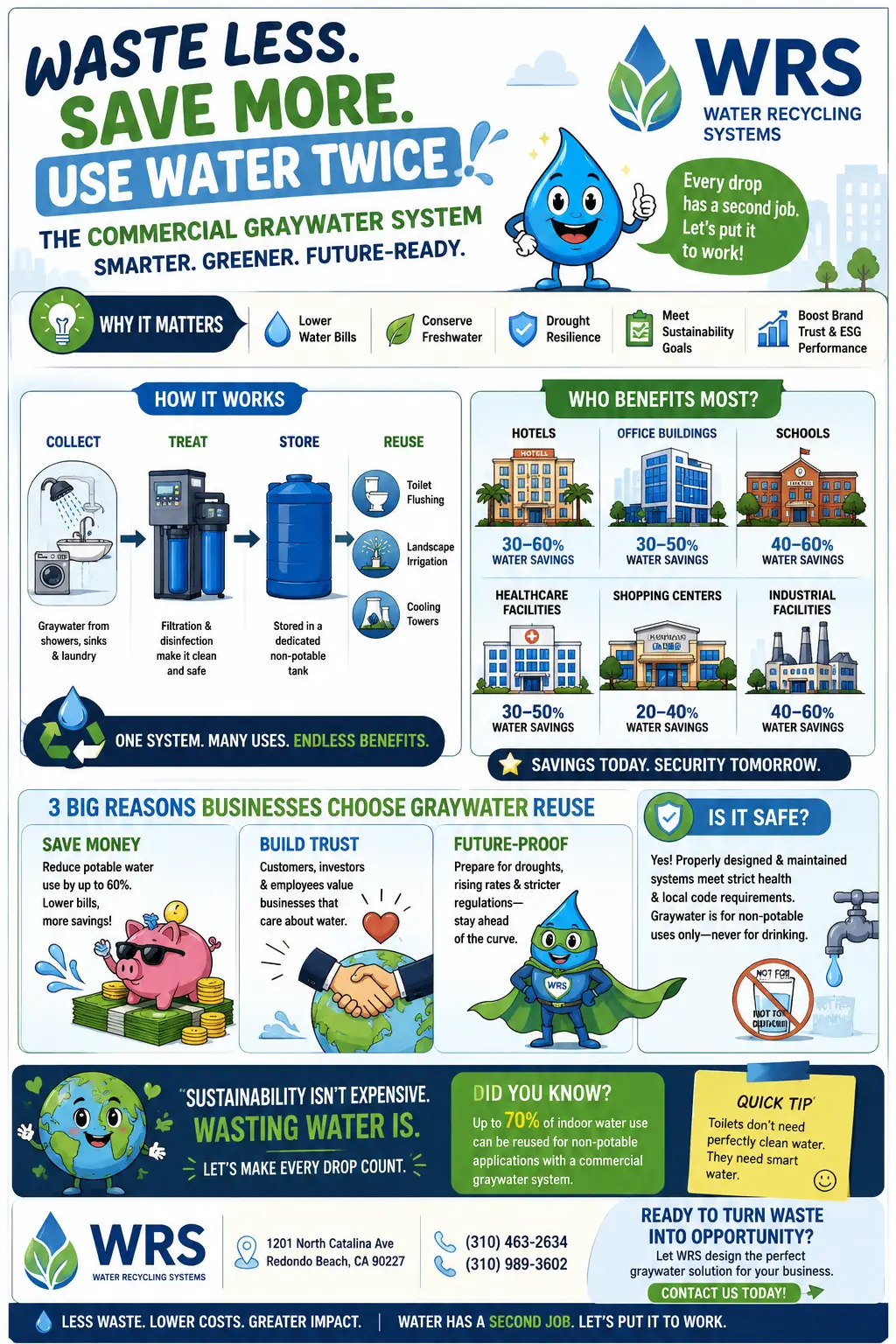
Commercial water recycling swoops in to save the day, collecting graywater and transforming it into a resource. You don’t need drinking-quality water to flush toilets or sprinkle gardens. Why pay for top-notch H2O when you could use the leftovers from hand washing or laundry?
Surprisingly, businesses often stumble upon benefits they didn’t expect:
- Lower monthly utility bills.
- Less need for the city’s water supply.
- Better chances to sail through droughts.
- Compliance made easy with water-efficiency goals.
- Strength in sustainability creds.
These savings snowball over time. A little reduction each day can add up to thousands (or even millions) of gallons saved each year. Does that make you perk up?
Recent studies back up this smart move. A 2025 critical review in Science of the Total Environment zoomed in on greywater reuse technologies. The researchers concluded that, when properly treated, greywater provides a reliable alternative for non-drinking uses, cutting down the demand for fresh water. They also showed that modern filtration and disinfection methods boost safety and reliability.
What does that mean for businesses? It means water you’ve already paid for should never just wash down the drain.
How Commercial Graywater Recycling Can Reduce Water Costs
Walk into any bustling office building. What do you see? Hands washing, restrooms getting busy, and break rooms buzzing all day long. So where does all that lightly used water go? No, not to some magical land. It usually dives straight into the sewer.
But what if we could grab that water instead?
A modern office building water reuse system collects graywater and sends it to a treatment station. After good filtration and disinfection, that water is ready for flushing toilets or watering the plants outside. Suddenly, the building’s economics look a lot brighter. Instead of constantly buying fresh water for every toilet flush, it’s recycling water that was already there.
Big office buildings can flush thousands of toilets each day. Even a tiny saving on each flush adds up faster than you can say “water conservation.”
And here’s a nugget not many talk about: businesses now share their environmental impacts with investors, clients, and partners. Water savings fit neatly into ESG reporting and sustainability programs. A commercial graywater system doesn’t just give you “green” points; it shows you mean business.
The question isn’t “Can we afford one?” It’s “Can we afford not to have one?”
Is Hotel Water Recycling the Next Standard?
In a hotel, water is like a never-ending resource. Guests shower. Housekeeping washes linens. Restaurants scrub dishes. Pools need love. Landscaping drinks up water. Each room sends out graywater daily, creating the perfect opportunity for a commercial graywater system.
Let’s say you have a 250-room hotel. What if every day, hundreds of showers run, pouring out thousands of gallons before breakfast? That water still has lots of potential. Instead of letting it go to waste, hotels can turn it into a reliable resource for toilets, landscaping, and cooling systems.
Research shows this trend is only getting stronger. A fascinating 2025 study in Discover Water explored low-energy graywater treatment methods that zap away pesky surfactants and harmful bugs. Led by researchers like Paul Westerhoff, this crew showed that modern treatment can boost efficiency without draining extra energy. For hotels, this means you can blend sustainability with profitability. What a duo.
With water recycling systems, businesses don’t just adapt; they thrive. Ready to jump on the water-saving train?
How Water Recycling Can Support Business Sustainability Goals
People notice the small stuff. They see when a hotel invites guests to reuse towels. They see when an office swaps out regular bulbs for energy-efficient lighting. And now, they’re starting to pay close attention to how businesses handle water.
Why’s that? Water isn’t just another utility bill anymore. In many places, it’s becoming a scarce resource, and everyone—customers, investors, employees—is aware of it. So what message does your business send when it comes to water use?
A commercial graywater system speaks volumes. It shows that your business doesn’t just talk about being eco-friendly. It puts those ideas into action. Instead of pouring thousands of gallons of reusable water down the drain each week, you’re using what’s already flowing through your building more wisely.
Have you ever thought about two hotels on the same street? Their prices are similar. Their rooms look cozy enough. But one hotel shares that it recycles graywater for flushing toilets and watering gardens. Which one feels like the better choice for a responsible business?
You guessed it. Many people will choose the hotel that acts with purpose. That’s why water conservation has woven its way into many companies’ environmental, social, and governance (ESG) goals. It’s not just about cutting costs; it’s all about building trust.
The U.S. Environmental Protection Agency (EPA) agrees, recognizing onsite non-potable water reuse—like treated graywater—as a smart way to ease the demand for fresh water. In California, for instance, properly treated graywater can help flush toilets, water plants, and even run ornamental fountains, as long as systems keep up with local standards.
Is Commercial Plumbing Ready for Graywater?
This question pops up a lot. “Do we have to tear the whole building apart?” The good news? Not usually.
Modern commercial plumbing can often be designed (or retrofitted) to handle graywater recycling. The secret? It all starts with separating graywater from blackwater right at the source. Once collected, the graywater goes through filtration, treatment, and disinfection before entering its own non-potable plumbing network.
Think of it as adding another lane on a busy highway. One lane carries drinking water. The other carries treated recycled water for jobs that don’t need to be drinkable. They never mix! This setup protects public health and helps businesses reduce their reliance on the municipal water supply.
Planning is key, of course. Hotels, office buildings, apartment complexes, schools, gyms, and mixed-use developments all come with different plumbing layouts. That’s why every commercial graywater system needs a customized design—it can’t just be forced into a building.
At Water Recycling Systems (WRS), that’s our approach. We craft solutions tailored specifically to each site because every commercial building has its own unique water needs.
Why Does a Commercial Graywater System Future-Proof Businesses?
Here’s a fact: nobody can see the future. We can’t predict when the next drought will hit or how water prices will shift over the next decade. But history provides some hints.
Across California and much of the western U.S., communities keep hunting for clever ways to stretch limited water supplies. Regulations change, and cities invest in recycled water setups. Businesses that prepare now will have more options and flexibility in the future.
That’s where a commercial graywater system becomes more than just a money-saving upgrade. It turns into a savvy long-term business strategy.
Think about this: you’re at the helm of a new office two decades from now. Would you rather rely entirely on city water? Or would you prefer a building that already recycles thousands of gallons every week? The choice seems clear.
California leads the pack in water reuse policy. Through its REUSExplorer program, the EPA highlights the state’s push for onsite graywater reuse for non-potable tasks like irrigation and toilet flushing, so long as systems adhere to local rules. This reflects a larger trend: using every available drop wisely instead of treating water like it’s disposable.
Businesses that invest in graywater systems now won’t just cut water bills. They’ll be poised for whatever tomorrow throws their way.
Frequently Asked Questions
Can a commercial graywater system supply drinking water?
No. Graywater systems are only for non-potable purposes. After treatment, this water is great for flushing toilets, watering plants, or powering cooling towers, not for drinking or cooking.
How much water can a commercial graywater system save?
It varies depending on building type and daily water use. Hotels, offices, schools, and apartments often see big drops in potable water use because toilets and irrigation soak up major amounts.
Are commercial graywater systems safe?
Yes. But only when they’re designed, installed, and maintained by the pros. Modern systems include multiple treatment stages—like filtration and disinfection—to ensure recycled water meets safety standards for non-potable use.
Can an existing commercial building install a graywater system?
In most cases, yes. Existing buildings can often be retrofitted for graywater systems, though the plumbing layout, available space, and local rules will guide the design. A professional assessment will pinpoint the best approach.
Which businesses benefit the most from graywater recycling?
Hotels, office buildings, schools, gyms, apartment complexes, healthcare facilities, and mixed-use developments generally see the biggest returns since they produce consistent graywater daily.
How does a graywater system support sustainability goals?
These systems cut down on fresh water demand and lower wastewater discharge. They show businesses are taking real action on the environmental front, boosting their ESG efforts and signaling to customers and stakeholders that they care about responsible resource management.
Every Drop Has Another Job to Do
Water has never been more valuable. So why use it once then toss it away?
A commercial graywater system offers businesses a smart path forward. It trims operating costs, strengthens sustainability efforts, and prepares buildings for a future where every drop counts.
At Water Recycling Systems (WRS), we believe the best water is the water you don’t need to buy twice. Whether you’re dreaming up a new development or upgrading an existing property, our team crafts custom graywater solutions that align with your building, goals, and long-term vision.
Ready to turn water waste into big-time savings? Contact Water Recycling Systems today to find out how a commercial graywater system can help your business save money, conserve resources, and tackle tomorrow’s water challenges head-on.
Key Takeaways
- A commercial graywater system helps businesses reuse water and cut waste.
- Hotels, office buildings, schools, and commercial spaces can significantly reduce their potable water needs.
- Water recycling aligns with sustainability goals while lowering operating costs.
- Modern graywater systems safely treat water for approved non-potable uses.
- Investing today equips businesses to navigate future water challenges and regulatory changes.