TL;DR
High water bills and strict green building targets make water management a major challenge for modern hotel managers. A hotel greywater recycling system solves this problem by collecting lightly used water from guest showers and laundries, cleaning it, and reusing it for flushing toilets and irrigation. Installing on-site treatment helps hotel operators lower utility costs while protecting local ecosystems and hitting sustainability targets.
Why Hotels Need Graywater Recycling Systems To Reduce Water Waste
Hotels use massive amounts of fresh water every single day. Guests take long showers, housekeeping runs endless laundry cycles, and kitchen staff wash thousands of dishes. Traditional hotels use clean drinking water once and wash it straight down the drain. This linear model drains local water supplies and creates huge operational expenses.
Utility companies raise sewer rates each year. At the same time, regional droughts force cities to limit commercial water intake. When hotels rely only on municipal water, they leave their balance sheets exposed to rising utility prices. At Water Recycling Systems, we help hospitality operators reuse water from sources such as guest rooms, laundry, and other building operations through advanced water recycling solutions. Treating and reusing water on-site helps hotels take control of their building operations and protect their profit margins.
What Is a Hotel Greywater Recycling System and How Does It Work?
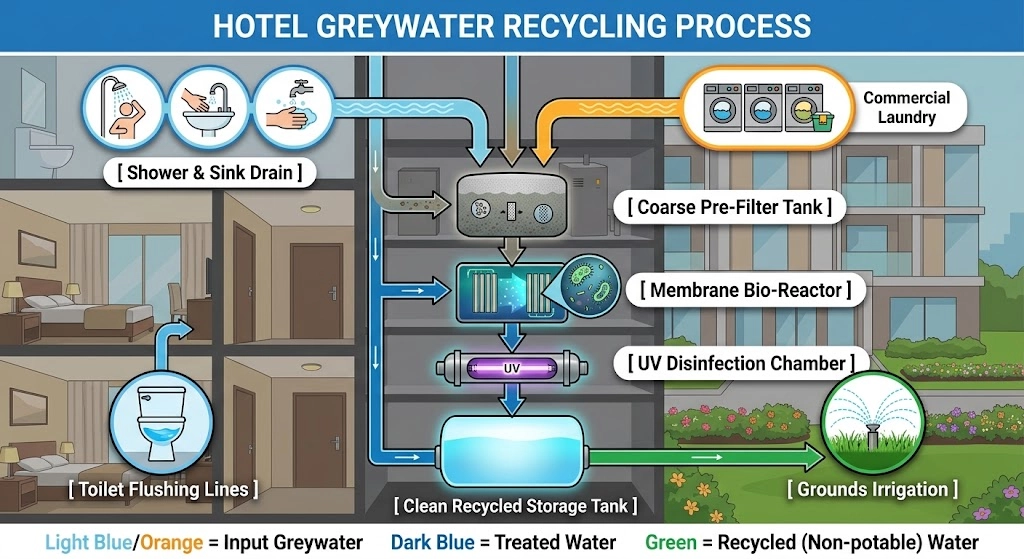
A hotel greywater recycling system collects gently used water from sinks, showers, and laundry equipment before it hits the municipal sewer. This water does not contain solid sewage or heavy organic waste. The recycling unit filters and disinfects this water so it can safely be used again for non-drinking needs.
1. Water Collection and Separation
Plumbing lines route water from guest bathrooms and clothes washers to a central collection tank. Heavy solids and hair are trapped in coarse screening units during initial collection.
2. Advanced Multi-Stage Filtration
The collected volume passes through membrane filtration units or biological reactors. These filters remove microscopic particles, soaps, oils, and organic residues.
3. Disinfection and Storage
Treated water goes through ultraviolet light exposure or chlorination to eliminate bacteria and pathogens. The clean effluent stays in a holding tank until the building calls for non-potable water.
4. Non-Potable Distribution
A dedicated pumping system drives the recycled supply back through secondary plumbing lines to flush toilets, run cooling towers, and feed ground irrigation systems.
How On-site Recycling Powers Hospitality Water Conservation
Integrating smart water reuse into daily property operations strengthens hospitality water conservation across every department. Guest rooms and laundry plants generate hundreds of gallons of reusable liquid every day. Recycling this output locally slashes overall fresh water intake by up to 45 percent.
On-site treatment helps commercial properties meet strict regional water conservation goals without affecting guest comfort. Guests enjoy full shower pressure and fresh linens while the building reuses every drop behind the scenes. This circular water model strengthens overall resource management and builds long-term operational resilience against municipal water bans.
| Hotel Department | Daily Water Source | Recycled End Use | Potential Savings |
| Guest Bathrooms | Showers and Sinks | Toilet Flushing & Cooling Towers | 30% to 40% Fresh Water Reduction |
| On-Premise Laundry | Washing Machine Rinses | Pre-Wash Cycles & Irrigation | 40% to 50% Laundry Water Reduction |
| Facility Maintenance | Air Handling Condensate | HVAC Cooling Tower Makeup | 15% to 25% Utility Bill Reduction |
Federal research from the U.S. Environmental Protection Agency’s On-site Water Reuse Resources shows that non-potable water reuse reduces pressure on local municipal infrastructure while lowering operational energy demands.
Unlocking Savings Through Commercial Laundry Greywater Treatment
Laundering bedsheets and towels consumes vast amounts of hot water and detergent. Installing commercial laundry greywater treatment allows hotel engineering teams to capture, clean, and recirculate warm rinse water back into initial wash cycles.
Modern laundry treatment plants use ceramic ultrafiltration membranes and continuous ozone injection. These systems destroy microbes, break down residual detergents, and remove lint particles. Recirculating warm rinse water back into washer extractors saves considerable energy because the building does not need to heat cold city water from scratch.
Facilities running high-volume wash programs can explore targeted hotel laundry water reuse setups to capture immediate utility savings. Recycling wash water cuts sewer release fees, reduces gas usage for water heating, and prolongs boiler equipment lifespan.
Boosting Hotel ESG Water Metrics for Investors and Guests
Travelers and corporate booking agents favor hotel brands with proven environmental practices. Tracking clear hotel ESG water metrics gives management verified data to publish in annual sustainability reports and international green lodging indexes.
Corporate travel managers require verified carbon and water footprint data before signing group booking contracts. Properties running verified water treatment systems show lower environmental impact scores and secure higher ESG ratings.
Federal data from the U.S. Geological Survey Commercial Water Use Study notes that commercial facilities like hotels consume large water volumes primarily for sanitation, maintenance, and cooling. Implementing local recycling directly targets these heavy operational demands.
Smart Strategies for Sustainable Resort Water Management
Managing extensive landscapes, decorative fountains, and golf courses requires vast quantities of irrigation water. Adopting sustainable resort water management protects lush outdoor amenities without drawing down drinking water reserves or violating municipal drought restrictions.
Resort properties can pair greywater treatment units with smart soil sensors and drip irrigation networks. Treated water flows directly to plant root zones during off-peak hours, preventing evaporation losses. Using reclaimed water for exterior landscaping keeps turfgrass green and flowers blooming even during summer watering bans.
Engineering teams can also route treated water into cooling tower loops to offset evaporative losses from HVAC systems. This closed-loop design lowers chemical additive needs, prevents mineral scaling, and reduces overall facility footprint.
Sustainable Water Management Guide
Implementing a hotel greywater recycling system cuts operational costs, secures green building certifications, and protects your property against rising utility rates. Switching to circular water management helps your facility lower environmental impact while delivering an exceptional guest experience.
Frequently Asked Questions
What is a hotel greywater recycling system?
It is an on-site water treatment plant that collects lightly used water from guest showers, sinks, and laundry units, purifies it, and redistributes it for toilet flushing, cooling towers, and grounds irrigation.
Is treated greywater safe for hotel guests and staff?
Yes, modern recycling units utilize multi-stage filtration, membrane bioreactors, and ultraviolet disinfection to eliminate bacteria and pathogens, meeting strict state health codes for non-potable building water reuse.
How much money can a hotel save using greywater recycling?
Hotels typically reduce their fresh water consumption and sewer utility fees by 30 to 50 percent, delivering full capital equipment payback within three to five years of installation.
Which hotel fixtures generate reusable greywater?
Guest room showers, bathtubs, bathroom washbasins, condensate from air conditioning units, and final rinse cycles from commercial laundry facilities all generate reusable, non-potable water.
Can recycled greywater be used for drinking or cooking?
No, greywater is strictly treated for non-potable applications such as flushing toilets, running HVAC cooling towers, washing outdoor surfaces, and irrigating garden landscapes across the property.
How does greywater treatment help hotel ESG ratings?
It directly lowers total water withdrawal rates, reduces municipal sewer loads, and decreases building heating energy demands, producing verifiable environmental data for corporate sustainability reporting.
Does installing a greywater system require special plumbing?
Yes, buildings require dual-plumbing pipe networks that keep greywater sources separate from blackwater sewage lines and distribute recycled output exclusively to designated non-potable fixtures.
How often do recycling systems need maintenance inspections?
Automated monitoring systems track water quality continuously, while physical pre-filters, pumps, and UV lamps require simple routine maintenance and inspection every three to six months.
Can existing hotels retrofit a greywater recycling system?
Yes, engineering teams can install compact modular filtration skids in basement equipment rooms and connect them directly to main laundry rooms or guest room drop stacks.
Key Takeaways
- On-site recycling reduces hotel freshwater consumption and sewer utility bills by up to 50 percent.
- Advanced membrane filtration makes reclaimed water completely safe for toilet flushing, HVAC cooling, and landscape irrigation.
- Capturing warm laundry rinse water cuts energy demands for boiler water heating.
- Tracking real-time water savings enhances corporate ESG performance scores and attracts eco-conscious travelers.
Elevate Your Property With Advanced Water Reuse Solutions
Ready to reduce operational utility expenses and elevate your resort’s sustainability profile? Contact our engineering team today to review your property’s water consumption patterns and discover how a customized water treatment solution can optimize your utility performance.