TL;DR
Is graywater safe for home use? Yes, but only when handled with proper plumbing setups, natural filtration, and correct application methods. Reusing gently used household water saves money and conserves natural resources without creating health risks.
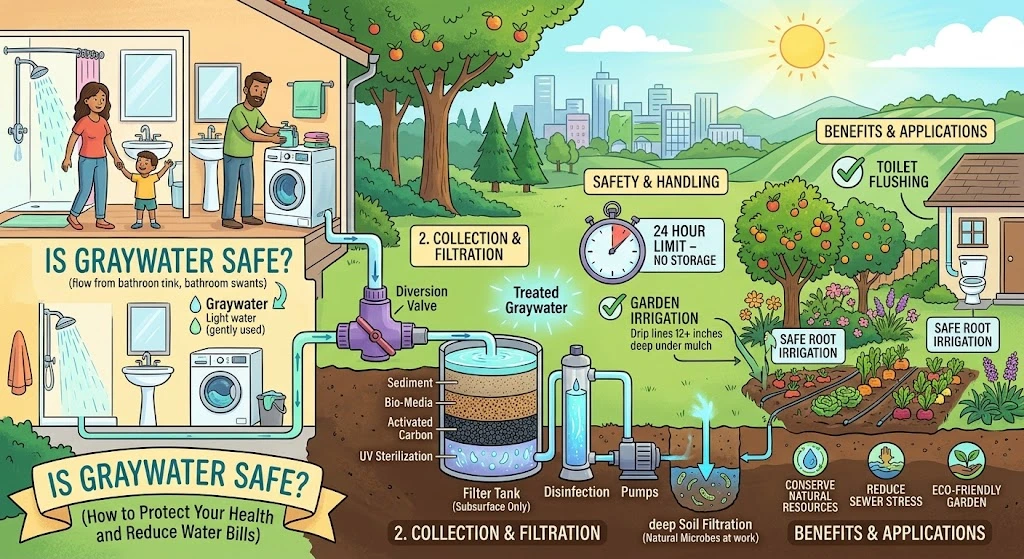
Every time you take a shower or wash a load of laundry, clean water goes straight down the drain. Many homeowners wonder: Is graywater safe to reuse for watering plants or flushing toilets? The short answer is yes, as long as you follow basic safety steps and proper installation techniques. Reusing this water helps lower your monthly utility bills and keeps your landscape green during hot, dry seasons. However, using untreated wastewater incorrectly can introduce bacteria into your soil or harm delicate plants. Learning graywater safety allows you to capture this resource safely while protecting your family and neighborhood environment.
What Exactly Is Graywater and Where Does It Come From?
Graywater is gently used water from household fixtures that has not come into contact with human waste. It includes drainage from your bathroom sinks, showers, bathtubs, and washing machines. Because it contains minor traces of soap, hair, skin cells, and lint, it requires basic handling precautions.
It is vital to distinguish this source from blackwater, which is water from toilets and kitchen sinks that carries heavy organic waste and high pathogen levels.
| Water Category | Common Home Sources | Contaminants Present | Health Risk Level | Safe Primary Reuse |
| Clean Tap Water | Faucets, main supply lines | None | Zero Risk | Drinking, cooking, bathing |
| Untreated Graywater | Showers, tubs, bathroom sinks, laundry | Mild soaps, lint, skin cells | Low to Moderate | Subsurface garden irrigation |
| Treated Graywater | Filtered shower and laundry runoff | Minimal debris, balanced pH | Very Low | Toilet flushing, surface landscape |
| Blackwater | Toilets, bidets, kitchen sinks | Pathogens, food particles, bacteria | High Hazard | Public sewer treatment only |
Understanding these categories prevents cross-contamination and ensures your home recycling system operates smoothly without health hazards.
Is Graywater Safe for Your Garden and Soil?
Using household runoff for landscaping is one of the most effective ways to conserve resources. However, direct contact between raw runoff and plant leaves can cause issues. The safest approach is to apply water directly to the soil rather than using overhead spray sprinklers.
Soil acts as a natural biological filter. Microbes in the ground break down mild organic materials and soaps before they reach deep groundwater layers. To protect your garden’s health, avoid using water containing harsh chemical bleaches, boron, or synthetic fabric softeners.
When watering food crops, apply runoff exclusively to the base of fruit trees and bushes. Never spray untreated runoff on root vegetables like carrots or leaf crops like lettuce, as edible parts must not touch untreated wastewater.
Learn more about choosing root-safe plants by checking our graywater plant guide to keep your landscape thriving year-round.
Health Hazards and Vital Water Reuse Health Rules
While graywater is far cleaner than toilet sewage, improper storage creates biological risks. Bacteria grow rapidly in warm, stagnant water. If left untreated in a tank for more than 24 hours, standing runoff turns into toxic blackwater.
The U.S. Environmental Protection Agency stresses that non-potable water must be handled using correct filtration and direct discharge techniques to prevent disease transmission.
Key rules for safe home handling include:
- Never store raw graywater: Discharge runoff into subsurface soil within 24 hours of collection.
- Keep water underground: Avoid pooling or standing puddles on top of your lawn where pets or children can touch it.
- Avoid human contact: Use drip irrigation lines buried under wood mulch rather than high-pressure spray nozzles.
- Label your pipes: Clearly mark all non-potable lines in purple to prevent accidental connections to drinking supply pipes.
To discover customized hardware options for your home, review our complete graywater system installation services for full residential design options.
System Design and Local Graywater Regulations
Before installing pipes or diversion valves, you must understand regional building codes. Graywater regulations vary significantly across cities and states. Some areas allow simple gravity-fed laundry systems without special permits, while others require official inspections and engineering approvals.
The Centers for Disease Control and Prevention highlights that maintaining strict separation between drinking supplies and untreated drainage prevents waterborne illness outbreaks.
Most legal codes require a dual-pipe installation. This setup allows you to switch a valve, sending water back to the public sewer system whenever you wash soiled diapers, use heavy hair dyes, or clean with harsh bleach.
Explore detailed engineering requirements on our graywater codes and permits resource page to ensure your installation meets local guidelines.
Advanced Treatment: Turning Runoff Into Recycled Water Safety
For homeowners who want to use recycled water indoors for toilet flushing, advanced filtration is necessary. Simple gravity filters are not enough for indoor applications.
Recycled water safety for indoor use relies on multi-stage filtration. Systems usually combine sediment filters, biological treatment, and UV disinfection or chlorination.
- Sediment Trapping: Removes lint, hair, and large particles.
- Biological Aeration: Uses beneficial bacteria to consume organic soaps.
- UV Disinfection: Destroys viruses and bacteria without adding harsh chemical smells.
Filtered water yields clean, clear water suitable for flushing toilets or irrigating lawns safely.
Check out our full range of residential graywater filtration systems to discover automatic filtration units built for household use.
Economic Benefits and Treated Graywater Cost Savings
Installing a recycling setup reduces overall household utility expenses while protecting your community during severe droughts. An average family generates tens of thousands of gallons of reusable water each year.
By redirecting shower and laundry discharge to your garden, you reduce municipal tap water consumption for irrigation by up to 50 percent.
Investing in treated graywater technology increases long-term property values and protects valuable landscape foliage during summer watering restrictions.
Read our breakdown on graywater cost savings to calculate how quickly a home filtration unit pays for itself.
Step-by-Step Guide to Safe Daily Operation
Operating a household water reuse setup requires minor daily adjustments. Following a simple routine ensures your system stays safe and operational.
First, switch your laundry detergent to liquid, plant-friendly, biocompatible products that are free from boron, salt, and chlorine. Liquid soaps dissolve fully and will not clog subsurface irrigation tubing.
Second, clear sediment filters every few months. Lint from washing machines can build up inside discharge lines and lower overall flow rates.
Finally, keep an eye on your yard. If you notice pooling water or unpleasant odors near your irrigation area, switch your diversion valve back to the main sewer line until the soil absorbs excess moisture.
Frequently Asked Questions
Can you drink treated graywater at home?
No, you should never drink graywater, even if filtered. It is strictly meant for non-potable uses like watering outdoor plants, subsurface garden irrigation, and indoor toilet flushing.
Does graywater smell bad in the yard?
Fresh graywater has very little odor. However, if stored untreated for over 24 hours, bacteria cause foul smells. Discharging water quickly into the soil under mulch prevents all unpleasant odors.
Is graywater safe for fruit trees and vegetables?
Yes, it is safe for fruit trees and bushes when applied to the soil base. Never apply untreated runoff to root crops or leafy vegetables where edible parts touch the water directly.
What detergents are safe for graywater gardens?
Choose liquid, plant-based soaps free of sodium, boron, chlorine, and synthetic fragrances. Biocompatible detergents keep your soil healthy and prevent salt buildup around delicate plant roots.
How much money can graywater systems save?
A properly designed system can reduce outdoor irrigation water demands by up to 50 percent, cutting overall annual water bills significantly depending on local municipal water rates.
Do I need a permit for a laundry system?
Many cities allow simple laundry-to-landscape setups without permits if guidelines are followed. However, complex systems with pumps, storage tanks, or indoor plumbing require official local permits.
Can graywater harm my garden soil over time?
Using soaps high in sodium or boron can damage soil structure over time. Using bio-friendly liquid soaps protects soil quality and helps plants absorb essential nutrients without mineral accumulation.
How long can you store graywater in tanks?
Untreated graywater should never be stored longer than 24 hours. Bacteria multiply rapidly in standing water, turning safe drainage into hazardous blackwater that creates health risks.
What is the difference between graywater and blackwater?
Graywater comes from showers, tubs, sinks, and washing machines with low biological hazards. Blackwater comes from toilets and kitchen sinks, carrying high disease risks and heavy biological solids.
Key Takeaways
- Safety First: Is graywater safe? Yes, when kept underground and used within 24 hours of generation.
- Soil Filtration: Ground microbes naturally clean mild soap residues, making runoff safe for trees and ornamentals.
- Detergent Selection: Always use plant-friendly, liquid, low-sodium soaps to protect soil health and prevent pipe clogs.
- Regulatory Compliance: Check local building codes to ensure your system meets health and plumbing regulations.
- System Maintenance: Regularly clean lint filters and maintain subsurface drip lines for long-term system performance.
Upgrade Your Home Water Efficiency Today
Stop letting clean money wash down your household drains. Transform your home into an eco-friendly property with our custom engineering designs. Contact our expert engineering team today to schedule your custom home evaluation and start saving water safely!